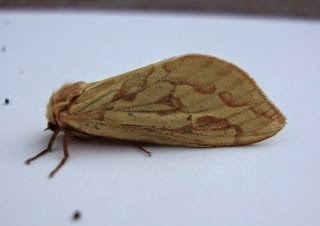
A greenhorn lepidopterist at large in suburban London

Berrylands Station is on the London Waterloo to Hampton Court line between New Malden and Surbiton, a 25 minute train journey from central London. I became aware of its potential for attracting moths in late August 2008. The station is situated on an embankment with the Hogsmill Sewage Farm directly to the north and a typical mix of suburban houses and gardens to the south. The elevated aspect of the station and the comparative lack of domestic and street lighting in the immediate area mean that it acts like a huge moth trap, there are white-painted covered waiting areas and staircases on both platforms, these are illuminated at night and most of the moths are found in these areas. What follows is my attempt as a novice lepidopterist to record and catalogue all the macro moths I encounter on my daily commute to work along with the occasional "awayday" in search of other British lepidoptera .

Sunday, March 27, 2016

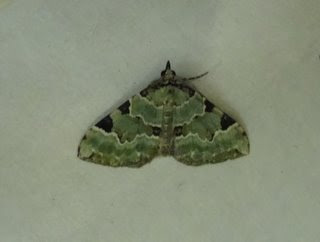
Green Carpet

Colostygia pectinataria

2009: singles on May 24th and August 6th.
2010: recorded on seven dates between May 17th and August 23rd, all singles except for two on June 1st.
2011: recorded on ten dates between May 10th and August 31st, all singles except for two on May 10th and August 18th, 22nd & 25th.
2012: recorded on ten dates between May 17th and August 28th, all singles except for four on May 24th.
2013: singles on May 20th, 30th & 31st and June 10th.
2014: one on May 27th.
2015: one on August 29th.


Saturday, March 26, 2016

November Moth

2012: one on October 22nd.

Friday, March 25, 2016

Winter Moth

Operophtera brumata

2008: singles on December 18th & 21st.
2009: singles on November 17th and December 8th & 12th.
2010: singles on November 19th and from December 6th to 8th, four on December 30th and six on December 31st.
2011: four on January 2nd, two on January 4th, one on January 7th.
2015: one on December 16th.


Thursday, March 24, 2016

Foxglove Pug

Eupithecia pulchellata

2011: one on June 23rd.
2012: one on June 19th.

Wednesday, March 23, 2016

Mottled Pug

2010: one on June 2nd.
2011: one on May 11th.

Tuesday, March 22, 2016

Lime-speck Pug

Eupithecia centaureata

2008: one on September 3rd.
2009: one on august 26th.
2010: recorded on nine dates between June 8th and August 23rd, all singles except for three on July 28th and two on August 2nd & 10th.
2011: one from June 16th to 21st.
2012: singles on August 1st & 15th.
2013: singles on August 7th, 9th, 16th & 23rd.
2014: singles recorded on eight dates between June 20th and August 6th.
2015 singles recorded on six dates between July 24th & 29th.

Monday, March 21, 2016

Freyer's Pug

Eupithecia intricata

2009: one on June 22nd.
2010: one on June 8th.

2011: one on July 1st

Sunday, March 20, 2016

Wormwood Pug

2014: one on August 1st.
2015: one on July 24th.

Saturday, March 19, 2016

Common Pug

Eupithecia vulgata

2010: recorded on eight dates between April 27th and July 16th, all singles except for two on June 9th.
2011: singles on May 18th and June 3rd & 5th, three on May 25th.


Friday, March 18, 2016

White-spotted Pug

2010: one on May 17th.
2011: singles on May 10th, 11th, 19th & 20th.
2012: one on July 25th.


Thursday, March 17, 2016

Bordered Pug

Eupithecia succenturiata

2010: singles on August 6th and September 8th.
2014: one on July 16th.

Wednesday, March 16, 2016

Plain Pug

Eupithecia simpliciata

2010: singles on July 21st & 30th, two on August 2nd.
2013: one on July 26th.
2014: singles on July 21st and August 1st.


Tuesday, March 15, 2016

Brindled Pug

Eupithecia abbreviata

2010: singles on april 19th and May 4th, two on May 28th.
2011: singles on five dates between April 12th & 25th, four on April 15th.
2012: singles on March 23rd & 29th, two on April 10th and May 24th & 28th.
2013: two on May 7th, singles on May 8th, 28th & 29th.
2014: two on April 23rd.
2015: singles on April 23rd, 26th, 27th, 28th & 29th.

Monday, March 14, 2016

Oak-tree Pug

Eupithecia dodoneata

2010: one on May 25th.
2012: one om May 8th.
2013: one on May 3rd.

Sunday, March 13, 2016

Juniper Pug

Eupithecia pusillata

2011: one on September 16th.


Saturday, March 12, 2016

Cypress Pug

Eupithecia phoeniceata

2009: singles on August 11th and September 25th.
2012: one on August 24th.
2014: one on September 10th & 11th.

Friday, March 11, 2016

Green Pug

2010: one on June 8th.
2012: one on June 6th.
2015: one on June 18th.

Thursday, March 10, 2016

Double-striped Pug

2008: one on September 10th.
2009: recorded on 22 dates between March 30th and September 9th with a peak count of four on August 20th.
2010: recorded on 40 dates between April 8th and October 7th with peak counts five on June 6th and August 12th.
2011: recorded on 19 dates between March 23rd and July 1st, all singles except for two on March 23rd & 27th and June 20th.

2012: recorded on 19 dates between March 16th and September 6th, all singles except for two on April 4th & 5th and three on August 18th.
2013: recorded on 25 dates between March 6th and September 25th, all singles except for three on April 24th & 25th, two on July 10th and August 12th & 21st and four on August 23rd.
2014: recorded on 12 dates between March 14th and September 26th, all singles except for two on September 5th.
2015: recorded on 28 dates between March 14th and September 13th with peak counts of three on August 30th and September 1st. 

Wednesday, March 09, 2016

Streak

Chesias legatella

2010: one on November 2nd & 3rd.

Tuesday, October 20, 2015

One L of a find

L-album Wainscot at Berrylands Station , 16/10/2015

It's not been a vintage year at the station, going into October on 85 for the year almost certainly means that a year list of 90+ is something of a pipe dream. Large Ranunculus on October 5th followed by Pink-barred Sallow on the 9th and Red-line Quaker on the 13th left me on 88 with the hope that a November or Winter moth might up the ante. On the evening of the 16th I found a wainscot resting on a ceiling joist towards the bottom of the downline staircase; Shoulder-striped Wainscot back in mid June was the first station  tick this year (and up until today the only wainscot) so any of the autumn mythimna would have added to the annual tally. Close focus binoculars are a prerequisite for mothing at the station and were duly employed in an attempt to identify this moth, as soon as I got it in focus I knew it was Mythimna l-album, L-album Wainscot. An anxious minute then followed as I coaxed the prize into my net and then a pot. Plant lists just a single record for the London area, near Bond Street in the West End on October 28th 1969. Since then the moth has become a little more frequent with something like 20 records in Surrey since 2005, an average of four a year making it easily my best find in the eight years of passive mothing at the station. I am grateful to Colin Plant and Graham Collins for their prompt feedback on the current status of L-album Wainscot in the London area and to Des McKenzie  for his confirmation of my identification and his ongoing support and enthusiasm for all things natural which inform and enrich the lives of those who take the time to see.  

Saturday, April 04, 2015

The Micro Moths of Berrylands Station (No.3 in an occasional series)


Common Plume (Emmelina monodactyla) 04/04/2015

The most commonly encountered micro moth at the station, it can be found virtually all year round sometimes in counts of double figures. It was late to appear this year with the first moth showing up on April 3rd, some two weeks later than Beautiful Plume (Amblyptilia acanthadactyla) which usually appears later.

Wednesday, April 01, 2015

The Mothing Year at Berrylands: 2014


Five of the eight new species recorded in 2014; Pine Hawkmoth, 
Canary-shouldered Thorn, Nut-tree Tussock, Gypsy Moth
and Clay-triple Lines

Ninety nine species of macro moth were recorded at the station during 2014, one less than last year; there were eight station firsts bringing the station list to 181 species; two species that had up until last year been recorded annually, Toadflax Brocade and Large Ranunculus, were no shows in 2014, probably as a result of inclement weather during their respective flight periods. The first moth of the year was a Mottled Umber on January 10th, early season moths are something of a rarity at the station so it was no surprise that the second species, Hebrew Character, turned up just over two months later on March 12th; four other species turned up during March, Double-striped Pug on the 14th, Common Quaker on the 17th, Early Grey on the 24th and a very early Small Dusty Wave on the 31st. Six more species were added during April, Herald on the 1st, Clouded Drab and Chocolate Tip on the 11th, Brimstone Moth on the 15th, and Brindled Pug and Pale Mottled Willow on the 23rd. Things picked up during May with 21 species recorded; Pale Tussock on the 8th, Lime Hawkmoth on the 12th, Garden Carpet, Yellow-barred Brindle, Cinnabar and Poplar Hawkmoth on the 15th, Common Pug on the 16th, Waved Umber, White Ermine, Muslin Moth and Angle Shades on the 18th, Least Carpet on the 20th, Figure of Eighty and Buff Tip on the 22nd, Common Marbled Carpet on the 23rd, Small Blood-vein and Green Carpet on the 27th, Common Wave on the 28th, Snout and Small Fan-foot on the 29th and Pale Oak Beauty, a station first, on the 30th. June was the most prolific month of the year with 32 new species recorded including two station firsts; Maiden's Blush and Treble Brown-spot on the 2nd, Willow Beauty, Light Emerald and Straw Dot on the 3rd, Peach Blossom, Single-dotted Wave and Buff Ermine on the 5th, Dwarf Cream Wave and Riband Wave on the 9th, Common Swift on the 10th, Common Footman, Shuttle-shaped Dart and Bright-line Brown-eye on the 11th, Blue-bordered Carpet and Fan-foot on the 12th, Barred Straw on the 13th, Seraphim and Common Rustic agg. on the 14th, Buff Arches and Vine's Rustic on the 16th, Common Emerald on the 17th, Lime-speck Pug on the 20th, Small Ranunculus, Scarce Silver-lines, Dun-bar and Heart & Club, a station first on the 23rd, Small Emerald and Rosy Footman on the 25th, Poplar Grey, a station  first on the 27th with Pheonix and Dingy Footman bringing the month to an end on the 30th. Things started to slow down in July with only 17 new species recorded but four of these were station firsts; Clay on the 1st, Marbled Beauty, on the 3rd, August Thorn on the 4th, Canary-shouldered Thorn and Pine Hawkmoth, both station firsts on the 8th, Dusky Sallow on the 11th, Small Fan-footed Wave  and Spectacle on the 14th, Bordered Pug on the 16th, Old Lady on the 17th, Red Underwing and Nut-tree Tussock, a station first on the 18th, Plain Pug on the 21st, Gypsy Moth, a station first on the 22nd, Pale Prominent and Knot Grass on the 24th and Middle-barred Minor on the 31st. Wormwood Pug on August 1st was a station first and one of nine new species recorded during the month, the others being Oak Nycteoline on the 5th, Garden Tiger on the 9th, Blood-vein on the 16th, Square-spot Rustic on the 19th, Clay Triple-lines, a station first on the 19th, Yellow Shell on the 26th, Burnished Brass on the 27th and Lesser Broad-bordered Yellow Underwing on the 28th. September saw just five new species added, Flounced Rustic on the 3rd, Orange Swift and Large Yellow Underwing on the 4th, Cypress Pug on the 10th and Lunar Underwing on the 23rd. Three new species were recorded during October, Lesser Yellow Underwing on the 1st, Red-line Quaker on the 13th and the last moth of the year, Red-green Carpet on the 29th. Only three other species were recorded at other stations on the route, Light Brocade on June 17th, and Scalloped Oak on July 7th, both at Raynes Park and Toadflax Brocade at New Malden on August 16th.

Saturday, June 28, 2014

Local patch butterflies

A couple of images from my local birding patch, East India Dock Basin, the male Common Blue was my first for the year and the Speckled Wood took some time out from beating up its neighbours to pose for me.


Common Blue, East India Dock Basin 26/05/2014

Speckled Wood, East India Dock Basin 26/05/2014

Saturday, January 11, 2014

The Mothing Year at Berrylands: 2013


Five of the 11 new species recorded in 2013: Oak Beauty,  Ghost Moth, 
Rosy Footman, Buff Arches and Buff Tip.

Exactly 100 Species of macro moths were recorded during 2013, the fifth complete year of surveying at the station. The first two months of the year produced no moths at all with only one species recorded during March, Double-striped Pug on the 6th. Two station firsts were recorded in April, Oak Beauty on the 9th and Dark Chestnut on the 15th, the month as a whole was rather poor with just five other species noted,  Common Quaker on the 10th, Herald on the 23rd, Early Grey and Oak Nycteoline on the 24th and Early Thorn on the 30th. May was also a little quiet with only ten species recorded; Oak-tree Pug on the 3rd, Brindled Pug on the 7th, Brimstone Moth and Toadflax Brocade on the 13th, Waved Umber on the 17th, Green Carpet and Angle Shades on the 20th, Yellow-barred Brindle and Swallow Prominent on the 21st, the latter the third station first of the year, and Common Carpet on the 22nd. Although no station firsts were recorded during June it was an excellent month for variety with 23  new species recorded; Buff Ermine on the 3rd, Poplar Hawkmoth and Heart & Dart on the 5th, Light Emerald on the 7th, Common Marbled Carpet on the 10th, Small Dusty Wave and Pale Prominent on the 11th, Pale Tussock and Miller on the 13th, White Ermine on the 14th, Riband Wave, Pale Mottled Willow and Silver Y on the 18th, Spectacle on the 20th, Figure of Eighty, Willow Beauty and Snout on the 21st, Treble Brown-spot, Garden Carpet and Bright-line Brown-eye on the 25th, Cinnabar and Small Fan-foot on the 26th and Freyer's Pug  on the 27th. Six station firsts were recorded during July; Ghost Moth  on the 4th, Fan-foot on the 15th, Buff-tip on the 16th, Buff Arches on the 23rd, Vapourer on the 25th and Rosy Footman on the 31st. In addition another 30 species were recorded making July 2013 the best month for species diversity during the entire recording period; Burnished Brass on the 1st, Straw Dot on the 2nd, Common Emerald and Least Carpet on the 3rd, Small Blood-vein, Dwarf Cream Wave, Brown Silver-line and Common Wainscot on the 5th, Common Footman and Elephant Hawkmoth on the 9th, Common Wave, Small Ranunculus and Smoky Wainscot on the 10th, Blue-bordered Carpet and Cypress Carpet on the 12th, Single-dotted Wave and Swallow-tailed Moth on the 15th, Scalloped Oak and Marbled Beauty on the 16th, Dingy Footman and Scarce Footman on the 19th, Cabbage Moth on the 22nd, Tree-lichen Beauty on the 23rd, Ruby Tiger and Broad-barred White  on the 24th, Small Fan-footed Wave and Clay on the 25th, Plain Pug on the 26th, Red Underwing on the 29th and Dun-bar on the 31st. August saw a return to normality after the welcome excess of July with 14 new species recorded including just one station first, Small Square-spot on the 23rd; fittingly the first species recorded was August Thorn on the 1st  with Yellow-tail on the same date, other August moths were Yellow Shell on the 6th,  Lime-speck Pug and Black Arches on the 7th, Common Rustic agg. on the 8th, Cloaked Minor on the 15th, Knot Grass on the 19th, Square-spot Rustic on the 20th, Garden Tiger on the 21st, Shuttle-shaped Dart on the 22nd and Large Yellow Underwing and Copper Underwing on the 28th. Seven species were recorded in September; Lesser Broad-bordered Yellow Underwing on the 2nd, Flounced Rustic on the 12th, vine's Rustic on the 13th, Lunar Underwing on the 18th, Lesser Yellow Underwing on the 20th, Dark Sword-grass on the 26th and Large Ranunculus on the 30th. Two species were recorded in October, Seteceous Hebrew Character, the last station first of the year on the 14th and Feathered Thorn, the last moth of the year on the 22nd.
Friday, January 11, 2013

The Mothing Year at Berrylands: 2012


Five of the eight new species recorded in 2012: Cypress Carpet, Barred Red,
 August Thorn, Dark Sword-grass and Common Carpet.

During 2012 a total of 87 macro moths was recorded at the station, the same as last year. The first moth of the year was  Spring Usher which turned up on the leap year date of February 29th followed by Dotted Border on March 1st then nothing for the next two weeks until Double-striped Pug and Early Grey both turned up on March 16th; four more species turned up during March, a very early Small Dusty Wave and Herald on the 21st,  Brindled Pug on the 23rd and Common Quaker on the 29th. April was quite disappointing with just three species added, Pale Mottled Willow on the 3rd, Hebrew Character on the 10th and Lime Hawkmoth on the 23rd. Things picked up during May with 15 species added, all but four in the second fortnight of the month; Brimstone Moth on the 3rd, Oak-tree Pug and Angle Shades on the 8th, and Silver Y on the 9th; the second half started with Green Carpet on the 17th followed by Flame Shoulder on the 19th then nothing until the end of month flurry commenced with Willow Beauty on the 27th followed by Maiden's Blush and Orange Footman on the 28th, Treble Brown-spot, Toadflax Brocade and Snout on the 29th with Common Swift, Purple Bar and Bright-line Brown-line all recorded on the 31st. Twenty species were recorded during June with the spoils equally divided between the first and second fortnights; Riband Wave and Cinnabar on the 1st, Common Marbled Carpet on the 3rd, Common Rustic agg on the 4th, Dark Arches on the 5th, Green Pug and White Ermine on the 6th, Garden Carpet on the 7th, Uncertain on the 9th and Pale Tussock on the 11th; the second fortnight kicked off with a station first in the form of Cypress Carpet on the 15th, not totally unexpected but very welcome nonetheless, the rest of June produced more standard fare, Pale Prominent on the 18th, Buff Ermine and Foxglove Pug on the 19th, Peach Blossom, Least Carpet and Small Fan-foot on the 20th, Waved Umber on the 25th, Dwarf Cream Wave on the 26th and Single-dotted Wave on the 28th. July also produced 20 species including three station firsts; Scalloped Oak and Common Footman on the 1st, Small Blood-vein and Flame on the 5th, Scarce Footman and Heart and Dart on 6th, Swallow-tailed Moth on the 10th, Pheonix and Lesser Yellow Underwing on the 12th, September Thorn, a station first on the 13th, Clay on the 16th, Barred Red, a station first on the 18th, Cabbage Moth on the 20th, Svensson's Copper Underwing on the 21st, Broad-barred White, a station first on the 23rd, Common Emerald, Common Carpet and White-spotted Pug on the 25th, Marbled Beauty on the 26th and Early Thorn on the 27th. Things started slowing down from August with only ten species added during the month; Lime-speck Pug on the 1st, Poplar Hawkmoth and Small Ranunculus on the 3rd, Yellow-barred Brindle on the 6th, Yellow Shell on the 7th, Dark Spinach on the 9th, August Thorn, a station first on the 10th then nothing for two weeks until Cypress Pug and Red Underwing on the 24th. Into September and by now it s very much a game of diminishing returns, Burnished Brass and Straw Dot appeared on the 3rd, Flounced Rustic on the 4th and Light Emerald on the 6th then nothing new until Square-spot Rustic on the 17th and Vine's Rustic on the 19th; September still had a surprise up its sleeve, a totally unexpected Dark Sword-grass on the 26th followed by the last moth of the month, Large Ranunculus on the 28th. Four new species appeared in October, Mallow on the 3rd, Lunar Underwing on the 7th, Brick on the 22nd and the final station first of the year a long overdue November Moth on the 23rd. Only one species was added during November, Feathered Thorn on the 8th with two more added in December, Winter Moth on the 19th and Mottled Umber on the 21st. Six other species were added at other stations along the route as follows: Early Moth at New Malden on February 19th, Dark Chestnut on March 6th, Seraphim on May 3rd, Dun-bar on July 6th, Dark/Grey Dagger agg.  on August 9th and Chocolate Tip on August 15th all at Raynes Park.