A greenhorn lepidopterist at large in suburban London

Berrylands Station is on the London Waterloo to Hampton Court line between New Malden and Surbiton, a 25 minute train journey from central London. I became aware of its potential for attracting moths in late August 2008. The station is situated on an embankment with the Hogsmill Sewage Farm directly to the north and a typical mix of suburban houses and gardens to the south. The elevated aspect of the station and the comparative lack of domestic and street lighting in the immediate area mean that it acts like a huge moth trap, there are white-painted covered waiting areas and staircases on both platforms, these are illuminated at night and most of the moths are found in these areas. What follows is my attempt as a novice lepidopterist to record and catalogue all the macro moths I encounter on my daily commute to work along with the occasional "awayday" in search of other British lepidoptera .

Saturday, June 28, 2014

Local patch butterflies

A couple of images from my local birding patch, East India Dock Basin, the male Common Blue was my first for the year and the Speckled Wood took some time out from beating up its neighbours to pose for me.


Common Blue, East India Dock Basin 26/05/2014

Speckled Wood, East India Dock Basin 26/05/2014

Saturday, January 11, 2014

The Mothing Year at Berrylands: 2013


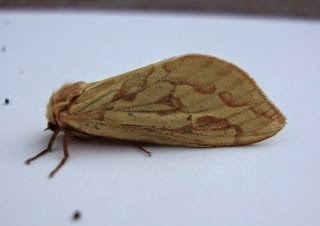
Five of the 11 new species recorded in 2013: Oak Beauty,  Ghost Moth, 
Rosy Footman, Buff Arches and Buff Tip.

Exactly 100 Species of macro moths were recorded during 2013, the fifth complete year of surveying at the station. The first two months of the year produced no moths at all with only one species recorded during March, Double-striped Pug on the 6th. Two station firsts were recorded in April, Oak Beauty on the 9th and Dark Chestnut on the 15th, the month as a whole was rather poor with just five other species noted,  Common Quaker on the 10th, Herald on the 23rd, Early Grey and Oak Nycteoline on the 24th and Early Thorn on the 30th. May was also a little quiet with only ten species recorded; Oak-tree Pug on the 3rd, Brindled Pug on the 7th, Brimstone Moth and Toadflax Brocade on the 13th, Waved Umber on the 17th, Green Carpet and Angle Shades on the 20th, Yellow-barred Brindle and Swallow Prominent on the 21st, the latter the third station first of the year, and Common Carpet on the 22nd. Although no station firsts were recorded during June it was an excellent month for variety with 23  new species recorded; Buff Ermine on the 3rd, Poplar Hawkmoth and Heart & Dart on the 5th, Light Emerald on the 7th, Common Marbled Carpet on the 10th, Small Dusty Wave and Pale Prominent on the 11th, Pale Tussock and Miller on the 13th, White Ermine on the 14th, Riband Wave, Pale Mottled Willow and Silver Y on the 18th, Spectacle on the 20th, Figure of Eighty, Willow Beauty and Snout on the 21st, Treble Brown-spot, Garden Carpet and Bright-line Brown-eye on the 25th, Cinnabar and Small Fan-foot on the 26th and Freyer's Pug  on the 27th. Six station firsts were recorded during July; Ghost Moth  on the 4th, Fan-foot on the 15th, Buff-tip on the 16th, Buff Arches on the 23rd, Vapourer on the 25th and Rosy Footman on the 31st. In addition another 30 species were recorded making July 2013 the best month for species diversity during the entire recording period; Burnished Brass on the 1st, Straw Dot on the 2nd, Common Emerald and Least Carpet on the 3rd, Small Blood-vein, Dwarf Cream Wave, Brown Silver-line and Common Wainscot on the 5th, Common Footman and Elephant Hawkmoth on the 9th, Common Wave, Small Ranunculus and Smoky Wainscot on the 10th, Blue-bordered Carpet and Cypress Carpet on the 12th, Single-dotted Wave and Swallow-tailed Moth on the 15th, Scalloped Oak and Marbled Beauty on the 16th, Dingy Footman and Scarce Footman on the 19th, Cabbage Moth on the 22nd, Tree-lichen Beauty on the 23rd, Ruby Tiger and Broad-barred White  on the 24th, Small Fan-footed Wave and Clay on the 25th, Plain Pug on the 26th, Red Underwing on the 29th and Dun-bar on the 31st. August saw a return to normality after the welcome excess of July with 14 new species recorded including just one station first, Small Square-spot on the 23rd; fittingly the first species recorded was August Thorn on the 1st  with Yellow-tail on the same date, other August moths were Yellow Shell on the 6th,  Lime-speck Pug and Black Arches on the 7th, Common Rustic agg. on the 8th, Cloaked Minor on the 15th, Knot Grass on the 19th, Square-spot Rustic on the 20th, Garden Tiger on the 21st, Shuttle-shaped Dart on the 22nd and Large Yellow Underwing and Copper Underwing on the 28th. Seven species were recorded in September; Lesser Broad-bordered Yellow Underwing on the 2nd, Flounced Rustic on the 12th, vine's Rustic on the 13th, Lunar Underwing on the 18th, Lesser Yellow Underwing on the 20th, Dark Sword-grass on the 26th and Large Ranunculus on the 30th. Two species were recorded in October, Seteceous Hebrew Character, the last station first of the year on the 14th and Feathered Thorn, the last moth of the year on the 22nd.

Friday, January 11, 2013

The Mothing Year at Berrylands: 2012


Five of the eight new species recorded in 2012: Cypress Carpet, Barred Red,
 August Thorn, Dark Sword-grass and Common Carpet.

During 2012 a total of 87 macro moths was recorded at the station, the same as last year. The first moth of the year was  Spring Usher which turned up on the leap year date of February 29th followed by Dotted Border on March 1st then nothing for the next two weeks until Double-striped Pug and Early Grey both turned up on March 16th; four more species turned up during March, a very early Small Dusty Wave and Herald on the 21st,  Brindled Pug on the 23rd and Common Quaker on the 29th. April was quite disappointing with just three species added, Pale Mottled Willow on the 3rd, Hebrew Character on the 10th and Lime Hawkmoth on the 23rd. Things picked up during May with 15 species added, all but four in the second fortnight of the month; Brimstone Moth on the 3rd, Oak-tree Pug and Angle Shades on the 8th, and Silver Y on the 9th; the second half started with Green Carpet on the 17th followed by Flame Shoulder on the 19th then nothing until the end of month flurry commenced with Willow Beauty on the 27th followed by Maiden's Blush and Orange Footman on the 28th, Treble Brown-spot, Toadflax Brocade and Snout on the 29th with Common Swift, Purple Bar and Bright-line Brown-line all recorded on the 31st. Twenty species were recorded during June with the spoils equally divided between the first and second fortnights; Riband Wave and Cinnabar on the 1st, Common Marbled Carpet on the 3rd, Common Rustic agg on the 4th, Dark Arches on the 5th, Green Pug and White Ermine on the 6th, Garden Carpet on the 7th, Uncertain on the 9th and Pale Tussock on the 11th; the second fortnight kicked off with a station first in the form of Cypress Carpet on the 15th, not totally unexpected but very welcome nonetheless, the rest of June produced more standard fare, Pale Prominent on the 18th, Buff Ermine and Foxglove Pug on the 19th, Peach Blossom, Least Carpet and Small Fan-foot on the 20th, Waved Umber on the 25th, Dwarf Cream Wave on the 26th and Single-dotted Wave on the 28th. July also produced 20 species including three station firsts; Scalloped Oak and Common Footman on the 1st, Small Blood-vein and Flame on the 5th, Scarce Footman and Heart and Dart on 6th, Swallow-tailed Moth on the 10th, Pheonix and Lesser Yellow Underwing on the 12th, September Thorn, a station first on the 13th, Clay on the 16th, Barred Red, a station first on the 18th, Cabbage Moth on the 20th, Svensson's Copper Underwing on the 21st, Broad-barred White, a station first on the 23rd, Common Emerald, Common Carpet and White-spotted Pug on the 25th, Marbled Beauty on the 26th and Early Thorn on the 27th. Things started slowing down from August with only ten species added during the month; Lime-speck Pug on the 1st, Poplar Hawkmoth and Small Ranunculus on the 3rd, Yellow-barred Brindle on the 6th, Yellow Shell on the 7th, Dark Spinach on the 9th, August Thorn, a station first on the 10th then nothing for two weeks until Cypress Pug and Red Underwing on the 24th. Into September and by now it s very much a game of diminishing returns, Burnished Brass and Straw Dot appeared on the 3rd, Flounced Rustic on the 4th and Light Emerald on the 6th then nothing new until Square-spot Rustic on the 17th and Vine's Rustic on the 19th; September still had a surprise up its sleeve, a totally unexpected Dark Sword-grass on the 26th followed by the last moth of the month, Large Ranunculus on the 28th. Four new species appeared in October, Mallow on the 3rd, Lunar Underwing on the 7th, Brick on the 22nd and the final station first of the year a long overdue November Moth on the 23rd. Only one species was added during November, Feathered Thorn on the 8th with two more added in December, Winter Moth on the 19th and Mottled Umber on the 21st. Six other species were added at other stations along the route as follows: Early Moth at New Malden on February 19th, Dark Chestnut on March 6th, Seraphim on May 3rd, Dun-bar on July 6th, Dark/Grey Dagger agg.  on August 9th and Chocolate Tip on August 15th all at Raynes Park.

Wednesday, August 15, 2012

Purple Hairstreak

Purple Hairstreak
As usual I'd given the station a good going over early morning with a nice Dark Spinach the pick of a rather meagre haul. I wasn't expecting much this evening, but it was overcast and muggy so I thought I'd give it another go and with just a minute until my train arrived I found what I thought was a carpet with it's wings up. I had no time to examine it so I potted it and took it home where I was amazed to see that it was a Purple Hairstreak. I have actively searched for White-letter Hairstreak as there are a lot of small elms just outside the station, but I've not had any luck; Purple Hairstreak is a station tick and I shall release this one into the oaks adjacent to the downline platform  tomorrow morning. It's been a very slow year at the station so far with just 74 species of macro recorded but this total does include five new species, Cypress Carpet, September Thorn, Barred Red, Broad-barred White and the latest addition, August Thorn.

Sunday, July 29, 2012

Awayday: Dungeness, July 21st 2012

Goat Moth
Striped Hawkmoth
Purple Thorn
Sussex Emerald
Waved Black
Clancy's Rustic
Blackneck
Privet Hawkmoth
obsoleta Pale Grass Eggar
Jersey Tiger (Brockley)
Cynaeda dentalis
A somewhat belated post about another enjoyable awayday to Dungeness with Steve Spooner. Last Saturday was warm and sunny and like most other moth people I was in sore need of some good leps to make up for the washed out spring offerings, as usual Dungeness did not disappoint. First up was a slightly tatty Striped Hawkmoth, a new one for Steve but one I've seen before on Portland; it was the first of four hawks the others being Privet, my first in over 30 years, Elephant and Poplar. New macros for me included Goat Moth,  Blackneck, Clancy's Rustic, Festoon, Purple Thorn and Small Waved Umber with a supporting cast of Dunge regulars, chief amongst them Sussex Emerald, Waved Black, Pygmy and Rosy Footmen and the obsoleta form of Pale Grass Eggar. A few good micros were also had including Synaphe punctalis and the sublimely beautiful Cynaeda dentalis. On the way home I dropped into Brockley, London headquarters of the Jersey Tiger and I found a single moth in the fading light, there should be dozens out by next week

Monday, June 18, 2012

Cypress Carpet

Cypress Carpet at Berrylands Station, 15/06/2012
Cypress Carpet at Berrylands Station, 18/06/2012
Last Friday (May 15th) I found a small, dark carpet at rest high in London-bound staircase; thinking it was probably the first Yellow-barred Brindle of the year I got my binoculars out and I was amazed to see it was a Cypress Carpet, a new macro for the station and a lifer for me. I managed to pot it and take a few photos before releasing it, as the photo above shows it had some damage to it's right wing. This morning I found another small dark carpet in almost exactly the same place; another Cypress Carpet, and a different one as the right wing shows no damage. I managed to get some photos of this one without potting it. I sometimes get a run of records from certain species which in subsequent years either vanish or become very scarce; Burnished Brass was everywhere in 2009 but I haven't had one since. My theory is that a female lays eggs on the larval foodplant close to the station and when the next generation emerges as adults they are attracted to the station lights, if the female lays on a plant that isn't close then the emerging moths are distracted by other lights and do not find the station. It's a nice theory, or was, as the nearest Leyland Cypress is in an area with lots of light pollution and the moths should not find the station at all. My guess is that I will be finding these sublime little carpets all summer long and then it will become a mega rarity again, so I'd better make the most of it while it lasts.    

Saturday, June 02, 2012

The Micro Moths of Berrylands Station (No.2 in an occasional series)


European Corn Borer (Ostrinia nubialis) 15/7/2011

This one's from last July and it caused me a lot of head scratching at the time until the penny finally dropped. European Corn Borer is not a species I would have expected to find in suburban London, but it has colonised the area recently and it is a welcome addition to the station list. On the continent it can be a severe pest of maize crops but I don't think the yeoman farmers of Surbiton have too much to worry about.

Wednesday, March 21, 2012

A very early Small Dusty Wave

The year often gets off to a slow start at Berrylands and 2012 was shaping up to follow that trend. Up until this morning just four species of macro have been logged and for the second year running no orthosias have put in an appearance. The fifth macro of the station year showed up this morning, a nice Herald, closely followed by the sixth, and I was astonished to see that it was a Small Dusty Wave. My earliest previous record of this common idaea was on April 29th 2010, a good month before it should be flying; this one must be some kind of record breaker, needless to say the CR has been informed.

Sunday, March 18, 2012

The Mothing Year at Berrylands: 2011


Four of the 15 new species recorded in 2011: Peach, Blossom, Elephant Hawkmoth, Leopard Moth and Purple Bar

The year got off to quite a good start with Mottled Umber and Winter Moth both turning up on January 2nd, but that was it until March 22nd when Double-striped Pug was recorded, these three moths were the only species noted in the first quarter of the year. Things started to pick up in April with five species recorded; Herald on the 11th, and Brindled Pug on the 12th, then nothing until Waved Umber on the 21st followed by Common Marbled Carpet and Pale Prominent, both on the 25th. May was the most prolific month with 26 species recorded; Brimstone Moth on the 2nd, Small Dusty Wave and Figure of Eighty both on the 6th then White-spotted Pug, Mottled Pug, Green Carpet and Bright-line Brown-eye all on the 10th; a Cinnabar turned up on the 12th along with the first of 15 new species for the station, a pristine Purple Bar. Things then slowed down for a few days until a Riband Wave on the 16th followed by Pale Tussock, Pale Mottled Willow and, for the third year running, Toadflax Brocade, all on the 17th,  Common Pug turned up on the 18th, Snout and Small Fan-foot on the 19th, Willow Beauty and Buff Ermine on the 22nd, White Ermine on the 23rd and Angle Shades on the 24th. Then nothing until the 30th when Least Carpet  and Treble Brown Spot turned up, the month finished in a rush with Small Blood-vein, Single-dotted Wave, Dwarf Cream Wave and Barred Straw all on the 31st. Five new species for the station turned up in June, Oligia agg. on the 2nd, Oak Nycteoline on the 16th, Pheonix on the 22nd, Foxglove Pug on the 23rd and Leopard Moth on the 27th; another 12 species were recorded during the month; Garden Carpet and Yellow Shell on the 5th, Common Footman on the 8th, Blotched Emerald on the 12th, Uncertain on the 14th, Lime-speck Pug on the 16th, Dun-bar on the 21st, Common Emerald on the 22nd, Brown Silver-line on the 23rd, Heart & Dart on the 26th, Scalloped Oak on the 27th and Clay on the 29th. July also produced five new species for the station; Peach Blossom on the 14th, Scarce Footman on the 21st, Tree-lichen Beauty on the 27th, Lunar-spotted Pinion on the 29th and Elephant Hawkmoth on the 30th. Freyer's Pug, Early Thorn and Silver Y all turned up on July 1st followed by Marbled Beauty on the 3rd with Dingy Footman and Small Ranunculus on the 5th, the second year in a row that this recent re-colonist has turned up at the station. Common Wainscot appeared on the 10th followed by Olive on the 14th, Dusky Sallow on the 22nd, Ruby Tiger on the 25th, Dark Spinach on the 26th and Swallow-tailed Moth and Cloaked Minor, both on the 30th. There were only five additions in August and no statiion firsts; Straw Dot  on the 2nd, Yellow-barred Brindle on the  8th, Lesser Yellow Underwing on the 9th, Shuttle-shaped Dart on the 11th and Small Fan-footed Wave on the 26th. September was a suprisingly good month with two station firsts; Centre-barred Sallow on the 9th and Juniper Pug on the 16th; six more species were recorded, Turnip Moth on the 1st, Square-spot Rustic and Vine's Rustic, both on the 2nd, Large Ranunculus on the 19th, Flounced Rustic on the 22nd and Lunar Underwing on the 23rd; by contrast Pink-barred Sallow  on the 3rd was the only new species recorded during October. The last two months of the year are usually very unproductive but this year both months contributed station firsts; Scarce Umber on November 24th and Red-line Quaker n December 22nd. Finally two other stations on the commute both added moths not recorded at Berrylands, Maiden's Blush on April 20th and Grey Pug on May 6th, both at Earlsfield with Chocolate Tip on May 6th and Broad-barred White on June 24th at Raynes Park. 

Tuesday, February 28, 2012

The Micro Moths of Berrylands Station (No. 1 in an occasional series)


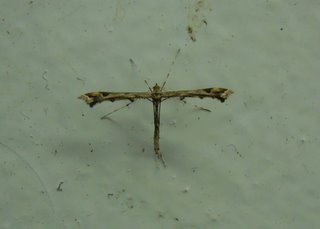
Beautiful Plume (Amblyptilia acanthadactyla) 28/2/2012

It is beyond the scope of this blog (and the identification skills of the author) to put a name to all the micro moths encountered at the station but if an identifiable micro presents itself for photography then it will be duly snapped and posted here for posterity. This Amblyptilia acanthadactyla is the first species for the station in 2012, it is usually a toss up between this and Emmelina monodactyla; for the first moth of the year, no other plume moths have yet been recorded  although some of them are so similar I have probably overlooked a species or two,

Sunday, February 26, 2012

A February Comma

Comma at Gallions Reach, 27/2/2012


I came across this Comma whilst out birding at Gallions Reach. I was half expecting to find a butterfly today on account of the incredibly mild weather, but I thought it would be a Red Admiral or Small Tortoiseshell. According to my Collins Butterfly Guide if the weather is mild Commas will emerge from hibernation in the winter months but I have never seen one in February; my 2012 lepidoptera list now stands at three: Early Moth at New Malden Station on February 19th, Amblyptilia acanthadactyla at Berrylands Station on February 25th and Comma at Gallions Reach on February 26th.

Saturday, August 27, 2011

Awayday: Dungeness, August 27th 2011

Frosted Orange, Dungeness RSPB, August 27th 2011

Convolvulus Hawkmoth, Dungeness RSPB, August 27th 2011

Red Underwing, Dungeness RSPB, August 27th 2011

Webb's Wainscot, Dungeness RSPB, August 27th 2011
Archer's Dart, Dungeness RSPB, August 27th 2011

Sharp-angled Peacock, Dungeness RSPB, August 27th 2011

Back to Dungeness with Steve Spooner today for my second (Steve's third) installment of coastal mothing. After the first visit it was always going to be a game of diminishing returns but there were enough new moths to keep me interested. The star of the show for most people was a Convovulus Hawkmoth, a true giant of British lepidoptery, but I've seen five or six before at Portland in Dorset; my personal favourite was Frosted Orange, a relatively common moth but a new one for me and as the photo shows, a stunning piece of wildlife. Other firsts were Bordered Beauty, Sharp-angled Peacock. Tawny Shears, White-line Dart, Grass Emerald, Yellow Belle, Webb's Wainscot, Cream-bordered Green Pea, Angle-barred Pug, Rosy Rustic, Small Mottled Willow and the stunning black & white micro Ethmia bipunctella, a real Dungeness speciallity. On the bird front we saw Garganey, Common Buzzard, Marsh Harrier, Sparrowhawk, Hobby and Whinchat; both Great and Cattle Egrets were on the reserve today but we failed to connect with either. On the way back Steve dropped me off at Denbies Hillside, just outside Dorking, where I managed to clear up a pair of embarrassingly overdue butterflies; the first a pristine male Adonis Blue, the second a rather tatty male Chalk-hill Blue; I was also hoping to see Silver-spotted Skipper but it was not to be, all in all another good excursion in the excellent company of Steve.

Saturday, July 30, 2011

Awayday: Dungeness, July 30th 2011

Bedstraw Hawkmoth, Dungeness RSPB, July 30th 2011

Elephant Hawkmoth, Berrylands Station, July 30th 2011

I spent a wonderful morning on the Kent coast today in the very agreeable company of Steve Spooner, at the Dungeness RSPB moth open day. I saw at least 24 new macro moths, pick of the bunch was easily the Bedstraw Hawkmoth in the photograph, my 10th sphingidae species in this country. Other highlights included Sussex Emerald, Scarce Chocolate Tip, Waved Black, White-banded Carpet, Pine Hawkmoth, Reed Dagger, Archer's Dart, Galium Carpet, Sallow Kitten and a bewildering array of wainscots including L-album, Twin-spotted, Shore and Brown-veined. After we left the RSPB reserve we headed for Dungeness Bird Observatory where we added Oak Eggar and the obsoleta form of Pale Grass Eggar to the list. On the way home I still had time to pay a visit to Berrylands where I found the Elephant Hawkmoth in the photo, the 150th species of macro moth for the station and a fitting end to a superb days mothing.

Saturday, June 25, 2011

Awayday: Box Hill, June 25th 2011

Pretty Chalk Carpet, Box Hill, June 25th 2011

Small Yellow Wave, Box Hill, June 25th 2011

Lace Border, Box Hill, June 25th 2011

V-Pug, Box Hill, June 25th 2011

I was invited by the Horsenden Hill lads to attend an all night moth trapping session at Box Hill tonight and a I jumped at the chance of encountering some chalk specialities at this historic site right on the edge of the London Natural History Society recording area. In the event I saw 13 new macro moth species, the stand-outs for me being the pristine Pretty Chalk Carpet in the photo and my first Small Elephant Hawkmoth. There were many other good moths, some of them in very good numbers including V-Pug, Fern, Small Yellow Wave (very smart), Beautiful Hook-tip (sublime), Short-cloaked Moth, Reddish Light Arches, Dark Umber, Shears, Clouded Brindle, July Highflyer, Lace Border and the nigra form of Satin Beauty which is something of a Box Hill speciality. Thanks to Andy Culshaw and David Howden for the invite and to Steve Spooner for the lift.

Thursday, February 24, 2011

The Mothing Year at Berrylands: 2010

Just four of the 33 new species recorded at
the station during 2010:

Small Ranunculus on July 13th


Ruby Tiger on July 29th

Dark Spinach on August 27th


Bulrush Wainscot on September 20th

No macro moths were recorded during January and February but a Pale Brindled Beauty, the first of 33 new moths at the station (NFS), turned up on March 1st, a white-spotted Satellite (NFS) turned up on the 12th, with an Angle Shades on the 23rd the only other species recorded in March. The first half of April was very quiet with just four year ticks recorded; Common Quaker on the 6th, Double-striped Pug and Early Thorn on the 8th and Herald on the 12th. The second half of April was better with six year ticks three of which were also new for the station; Brindled Pug (NFS) on the 19th, Maiden's Blush on the 26th, Common Pug (NFS) on the 27th, Small Dusty Wave and Pale Prominent (NFS) on the 29th and Brimstone Moth on the 30th. A Pale Mottled Willow on the 13th was the only new moth in the first half of May, the last two weeks however saw a dozen new arrivals; Green Carpet and White-spotted Pug (NFS) on the 17th, Yellow-barred Brindle on the 18th, Lime Hawkmoth on the 19th, Toadflax Brocade on the 20th, Common Swift, Seraphim (NFS) and Common Wave on the 21st, White Ermine on the 24th, Oak Tree Pug (NFS) on the 25th and Garden Carpet and Buff Ermine on the 27th. June proved to be the busiest month of the year with 31 species recorded, including nine station firsts; Light Emerald, Cinnabar, Willow Beauty and Silver Y, all on the 1st, Pebble Hook-tip (NFS) and Mottled Pug (NFS) on the 2nd, Dwarf Cream Wave and Waved Umber on the 3rd, Treble Brown Spot, Riband Wave, Poplar Hawkmoth, Pale Tussock and Straw Dot all on the 7th, Lime-speck Pug, Freyer's Pug and Green Pug (NFS) on the 8th, Small Fan-foot (NFS) on the 10th, Orange Footman (NFS) and Iron Prominent (NFS) on the 11th, Miller (NFS) on the 12th, Least Carpet and Middle-barred Minor (NFS) on the 15th, Light Arches on the 21st, Large Yellow Underwing and Smoky Wainscot on the 22nd, Small Fan-footed Wave (NFS) on the 23rd, Small Blood-vein and Brown Silver-line on the 24th, Common Emerald and Common Footman on the 25th and Treble Lines on the 30th. Dusky Sallow on July 5th was the first of six station firsts in July, Cabbage Moth also turned up on the 5th followed by Spectacle on the 7th, Single-dotted Wave on the 9th and Scalloped Oak on the 10th, it was then quiet until the 13th when Small Ranunculus (NFS) put in an appearance, the 14th saw the arrival of Swallow-tailed Moth and Dark Arches (NFS) then Dun-bar on the 16th, Bright-line Brown-eye on the 20th, Plain Pug (NFS) on the 21st and Marbled Beauty on the 22nd; then nothing until the 28th when Common Carpet (NFS) and Yellow-tail appeared; the final new moth of July was Ruby Tiger (NFS) on the 29th. August got off to a good start with Yellow Shell, Copper Underwing and Red Underwing all appearing on the 2nd, Cloaked Minor, the first of six station firsts for the month, turned up on the 4th followed by Bordered Pug (NFS) on the 6th; there were no new arrivals for almost a week until Shuttle-shaped Dart turned up on the 11th followed by Dot Moth (NFS) on the 13th and Common Wainscot (NFS) on the 16th, then nothing new until the 27th when Vine's Rustic (NFS) and Dark Spinach (NFS) made a nice double to end the month. September got off to a slow start with nothing new until the 8th when Blood-vein and Square-spot Rustic appeared, then there was another large gap until Lesser Yellow Underwing turned up on the 17th followed by Bulrush Wainscot, the only station first of the month, and Large Ranunculus, both on the 20th; Snout turned up on the 21st with Old Lady, the last moth of the month on the 27th. Pink-barred Sallow on the 4th was one of only three new moths that turned up in October, but it was a station first, the others were Lesser Broad-bordered Yellow Underwing also on the 4th and Common Marbled Carpet on the 9th. Three new moths turned up in November, two of them station firsts; Streak on the 2nd and Mottled Umber on the 13th; the last new species of the year was Winter Moth on November 18th.

Away from Berrylands six other species were recorded at stations along the route as follows:

Earlsfield Station, Oak Beauty on April 13th and Figure of Eighty on June 3rd.
Raynes Park Station, Muslin Moth on May 7th and Leopard Moth on July 10th.
New Malden Station, Early Moth on February 17th and Twin-spotted Quaker on April 5th.

Tuesday, November 16, 2010

Small Tortoiseshell


Whilst at work back in July I found this pristine Small Tortoiseshell sunning itself on the side of a metal container, I managed one shot before it flew off but I think it's come out quite well. It seems that Small Tortoiseshells are making a comeback after a couple of years when they seemed to be in real trouble; the demise of the last few years has made me appreciate what a beautiful butterfly it is and that I should never take such a thing for granted.